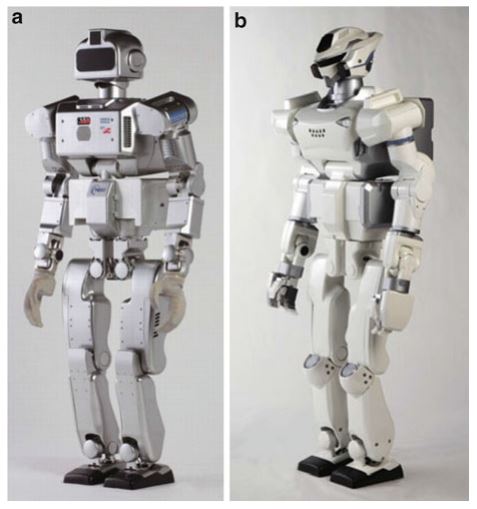
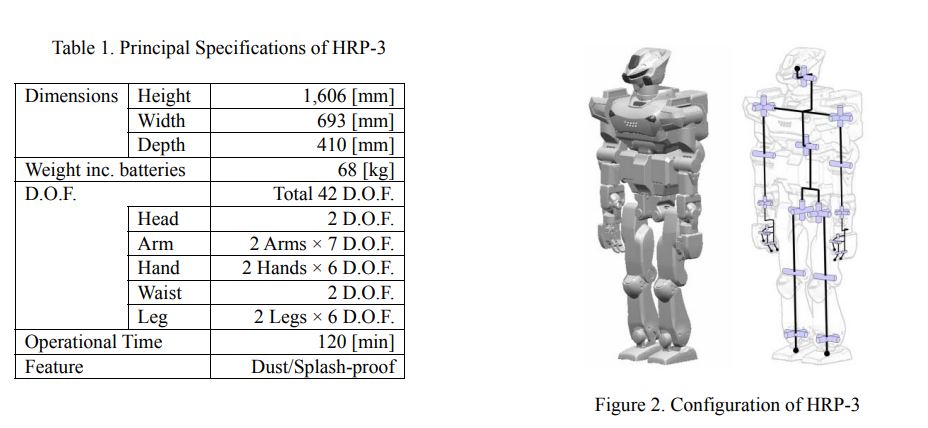
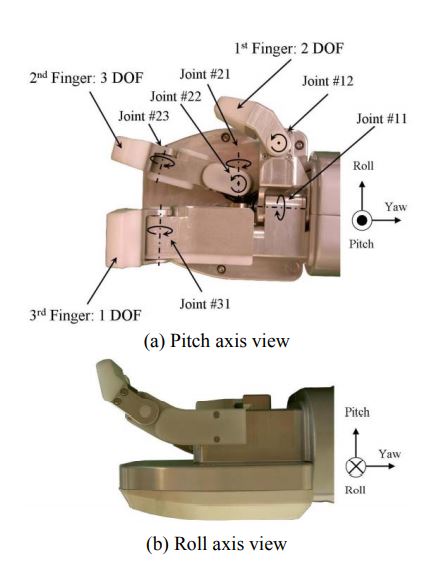
The main improvement over HRP-2 was to create a robot in accordance with IEC IP52 (splash-proof and dust-proof). In order to deal with the stricter cooling requirements, the motor controllers for the arms were moved into the core of the robot. Also each arm got an additional DoF over HRP-2 (7 per arm vs 6 per arm). The redundant DOF was effective to avoid collisions between the arms and the body. Second, each hand of HRP-3 had three fingers of total 6 DOF, while HRP-2’s hand was a 1 DOF gripper.
https://www.youtube.com/watch?v=vGzClnpzSOY
https://youtu.be/ZyJr0ecPcwY?t=56
https://www.youtube.com/watch?v=Y0Rj8KyULvc
Kenji Kaneko of AIST was able to make HRP-3 vertically jump 3.4 cm. The limiting factor was the impact on the legs when landing. More info in 2足歩行ロボットの鉛直軸等速度運動による跳躍動作の一考察
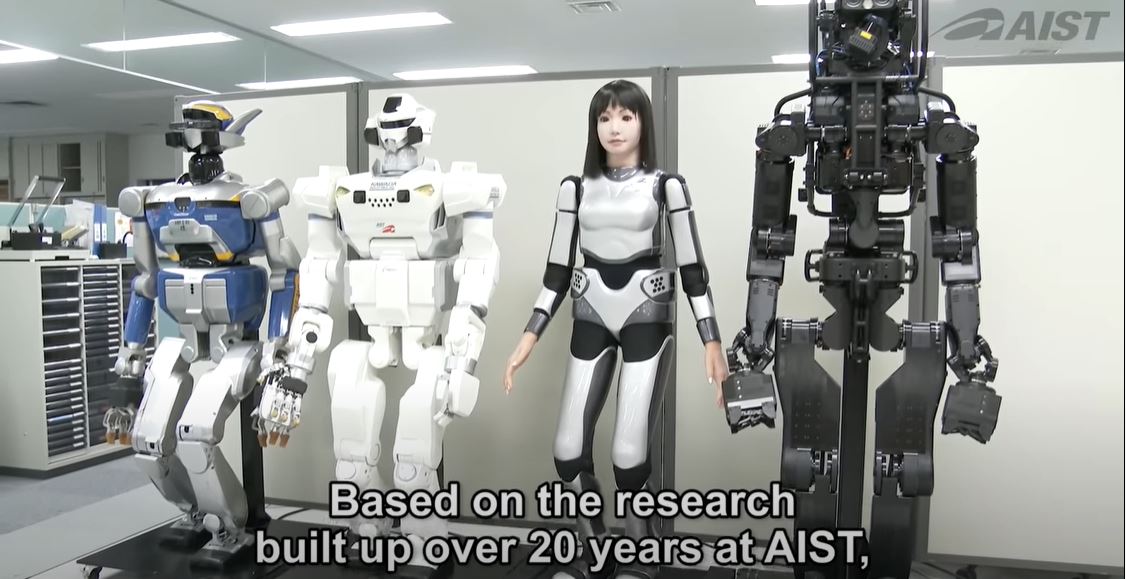
One HRP-3 (leftmost) and one HRP-3P (3rd robot from left) are on display at Science Square TSUKUBA as part of the “Wonders of Science” exhibit.


Just a couple hundred feet away in the CNRS-AIST JRL Laboratory. Another HRP-3 is on display. Notice the two extra cameras on the chest. (Note only HRP-3 is currently on display, the other three robots are being used)
Written on April 24, 2021
Updated on August 20th, 2024