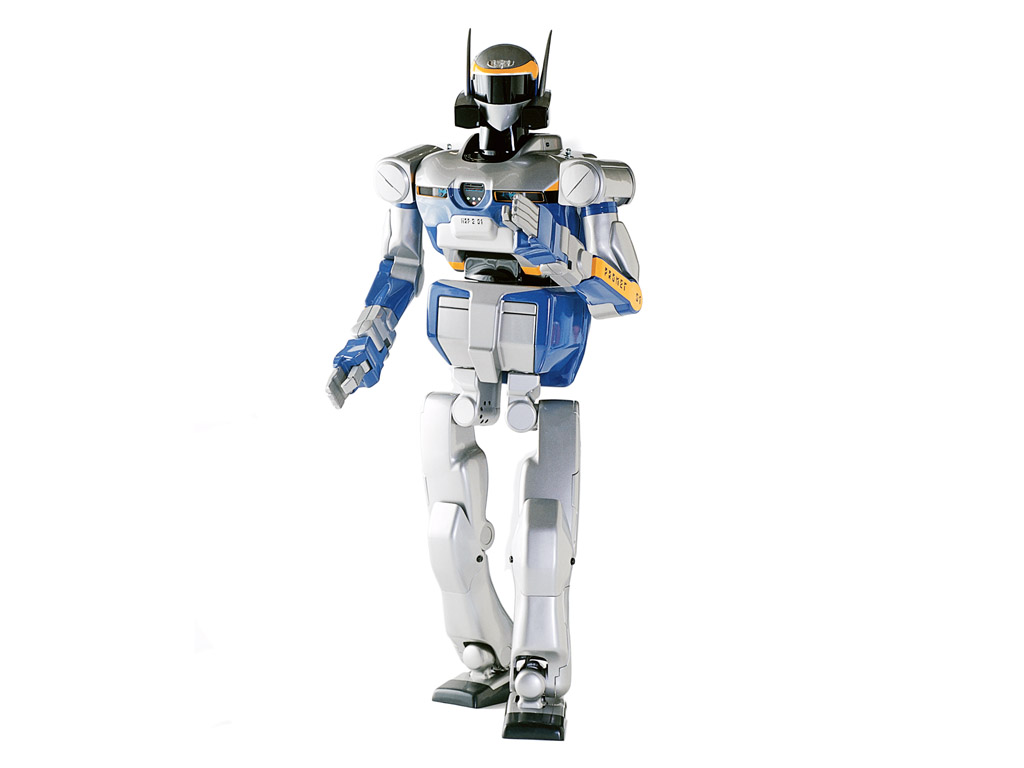
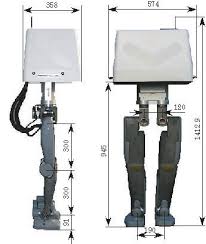
HRP-2L was developed by AIST and Kawada Industries Inc. in 2001. HRP-2L was a 12 DOF biped robot with 1413 mm height and 58.2 kg weight, which consisted of the leg mechanism, a Pentium III control computer, batteries, and a dummy weight of 22.6 kg. The robot is powered by brushed DC motors paired with harmonic gearboxes of a ratio of 1/160. The highest powered motor is the knee at 150 watts. The robot’s frame is made from cast magnesium alloy. The cantilever type structure, which reduces collision between the thighs, gives the following advantages: a wide area of landing point for swinging leg and cross-legged walk (like on a balance beam).
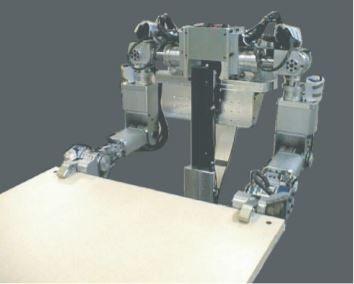
HRP-2A, a dual armed upper torso, was developed independently from the leg module. It has 6 DoF per arm and 1 DoF per gripper.
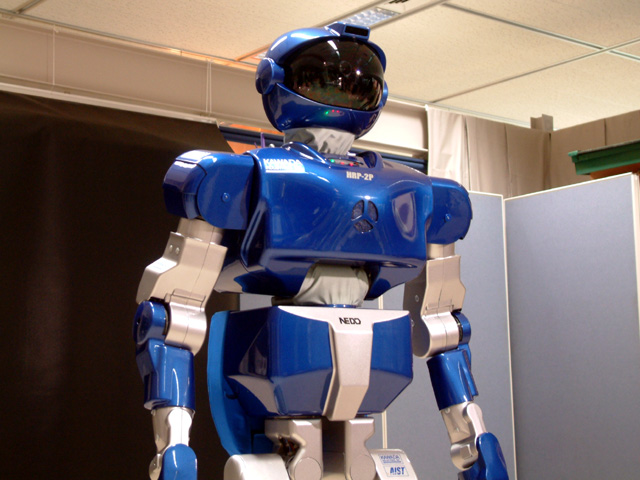
After the successful development of HRP-2L and HRP-2A, HRP-2P was developed by AIST, Yaskawa Electric Corporation, and Kawada Industries Inc. in 2002. HRP-2P has pitch and yaw DoFs in its waist, allowing it to get up from the floor (HRP-1 did not have these DoFs).
https://www.youtube.com/watch?v=8ckSC0WuqX0
Mr. Yutaka Izubuchi designed the distinctive appearance of HRP-2, which only differs in height and weight slightly from HRP-2P. However, there are several internal differences. For example, the mechanical links were designed using FEM analysis to increase rigidity which was necessary for stable walking. Another improvement was the cooling systems that ventilates the inside of the body and links, which prevents overheating of the motors and electronics. HRP-2 can walk for 60 minutes at 1.25 km/h compared to HRP-2P that can only walk for 20 minutes at 0.675 km/h. This improvement is due to HRP-2 using more powerful motors for the legs, having a motor cooling system, and having a “better” battery pack.


To reduce the risk of breaking HRP-2P while developing a falling controller, HRP-2L was modified into HRP-2LF. The modifications included a cushion near the hip, a roll bar around the computer, the computer was floated on anti-vibration mounts, each PCB was tensioned for vibration resistance, accelerometers on the frame and computer, “reflective memory” for data logging even if the robot was damaged, and an external battery. More information can be found in The First Human-size Humanoid that can Fall Over Safely and Stand-up Again